
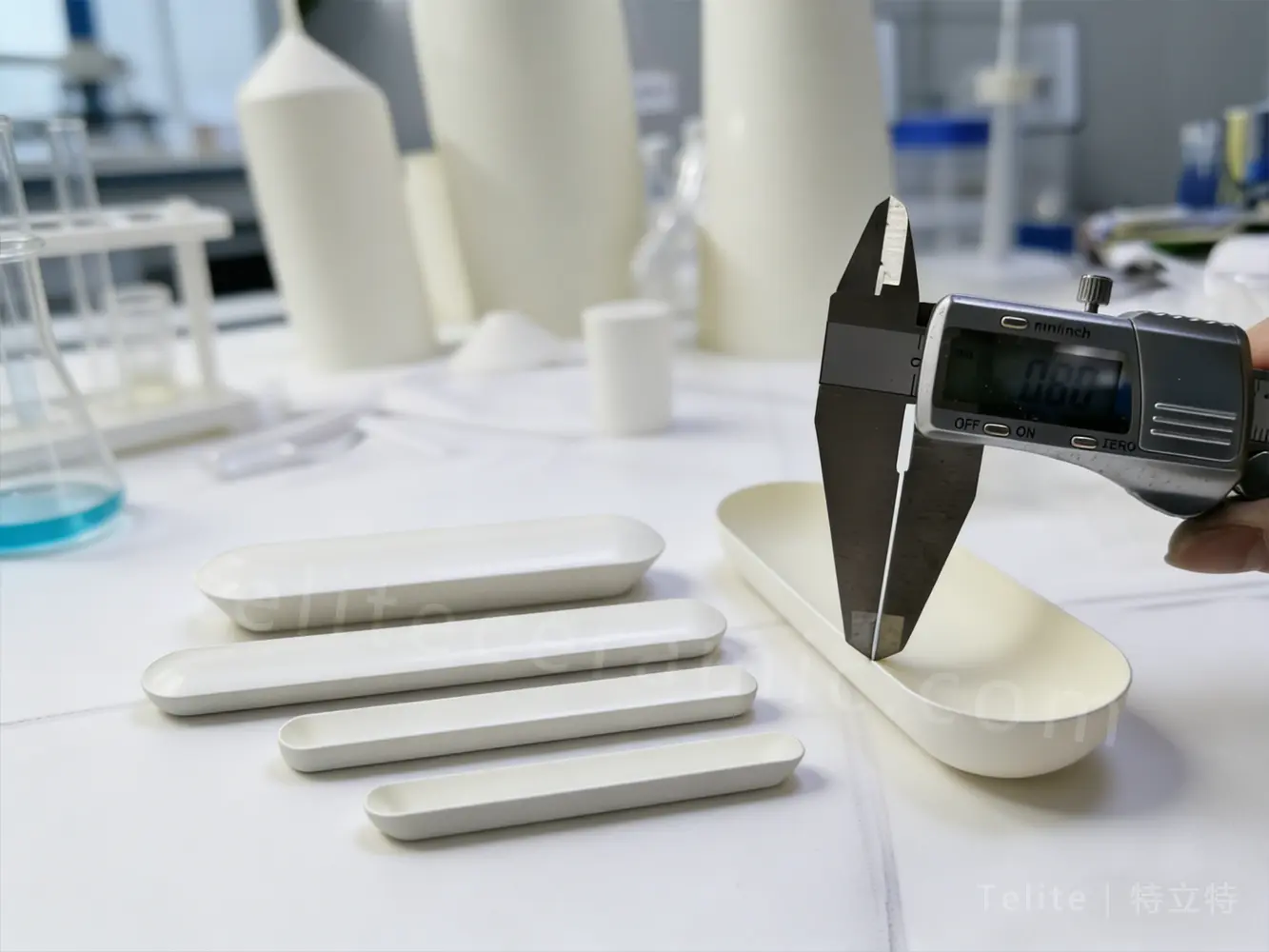
PBN Boat for Polycrystalline Synthesis, Heat Treatment and Vacuum Evaporation
A PBN Boat is a high-purity boat-shaped container made from pyrolytic boron nitride. It is primarily used for compound semiconductor polycrystalline synthesis, high-purity material heat treatment, reaction processing under vacuum or inert atmosphere, and selected VTE, OLED and vacuum evaporation applications. In most processes, the PBN boat acts as a material container rather than a directly energized resistance-heating element.
A PBN Boat, also called a Pyrolytic Boron Nitride Boat, PBN Evaporation Boat, PBN Synthesis Boat or PBN Polycrystalline Synthesis Boat, is designed for processes requiring high purity, low outgassing, low contamination and stable material containment.
PBN boats can hold powders, granules, pellets, chips, solid pieces and pre-synthesized materials. They are commonly installed in vacuum furnaces, tube furnaces, sealed ampoules, inert-atmosphere furnaces, high-purity reaction systems and selected evaporation equipment.
Unlike tungsten, molybdenum or tantalum evaporation boats, a PBN Evaporation Boat is normally not used as a directly energized resistance heater. It is usually heated indirectly by an external heater, radiation source or furnace hot zone while functioning as a high-purity material holder, reaction vessel or liner.
1. What Is a PBN Boat Used For?
PBN boats are used where the processing material is sensitive to carbon, oxygen, metallic impurities, particles or outgassing from the container. Typical applications include:
- Compound semiconductor polycrystalline synthesis;
- Preparation of polycrystalline feedstock before single-crystal growth;
- High-purity material synthesis and pre-reaction processing;
- Heat treatment, annealing and thermal conditioning of powders and solids;
- Processing of selected sulfides, selenides and tellurides;
- Material holding under vacuum or inert atmosphere;
- Selected VTE and OLED evaporation material handling;
- Vacuum evaporation source-material testing;
- Semiconductor laboratories and advanced-material research.
2. PBN Polycrystalline Synthesis Boat for Compound Semiconductors
In some compound semiconductor production processes, high-purity elemental or compound raw materials must first be synthesized into polycrystalline material. The resulting polycrystalline feedstock may then be used for single-crystal growth, thin-film deposition, evaporation-source preparation or material characterization.
A PBN Polycrystalline Synthesis Boat provides a high-purity reaction and holding container for these processes. Compared with conventional alumina, graphite or metallic boats, PBN can reduce the risk of introducing carbon, oxygen, metallic impurities and processing particles from the container.
For systems containing volatile components, boat selection must also consider reaction temperature, vapor pressure, loading depth, boat opening, sealing method, condensation area and thermal-field design. Compatibility should be evaluated from the complete process conditions rather than from the material name alone.
3. PBN Synthesis Boat for High-Purity Material Processing
A PBN Synthesis Boat can be used for pre-reaction, annealing, high-temperature treatment and material containment of powders, granules, chips and solid pieces. It is particularly useful when ordinary ceramic, quartz, graphite or metallic containers may introduce unwanted contamination.
Before use, the following factors should be confirmed:
- Material composition and purity requirement;
- Operating and maximum temperature;
- Vacuum level or process atmosphere;
- Whether the material melts during heating;
- Wetting, sticking or wall-climbing behavior;
- Volatilization, splashing and condensation risks;
- Possible chemical interaction with PBN;
- Required cleaning, baking or vacuum conditioning procedures.
For new material systems without established process data, a small-load or short-cycle compatibility test is recommended before full-scale production use.
4. PBN Evaporation Boat for Vacuum, VTE and OLED Processes
A PBN Evaporation Boat may be used as a clean material holder in selected vacuum evaporation, VTE and OLED-related processes. The low-outgassing and high-purity characteristics of PBN can help reduce contamination from the evaporation container.
The PBN boat is generally heated by an external heater or furnace structure. It should not automatically be treated as a replacement for a tungsten, molybdenum or tantalum resistance evaporation boat.
For evaporation applications, the following information should be confirmed:
- Heating method and hot-zone structure;
- Evaporation temperature and maximum operating temperature;
- Material form, such as powder, granule, pellet or solid piece;
- Loading weight and loading depth;
- Whether the material melts or remains solid;
- Wetting, wall-climbing and splashing behavior;
- Condensation near the boat opening or cold zones;
- Vacuum, outgassing and contamination requirements.
5. Difference Between PBN Boat, PBN Evaporation Boat and PBN Synthesis Boat
| Product Name | Meaning | Typical Application |
|---|---|---|
| PBN Boat | General product name | High-purity material holding, synthesis, heat treatment and evaporation-related processes |
| Pyrolytic Boron Nitride Boat | Full material name | Technical specifications and material identification |
| PBN Evaporation Boat | Named according to evaporation use | Vacuum evaporation, VTE, OLED and evaporation-source material holding |
| PBN Synthesis Boat | Named according to material-synthesis use | High-purity powder, granule and compound-material synthesis |
| PBN Polycrystalline Synthesis Boat | Designed for polycrystalline feedstock synthesis | Compound semiconductor polycrystalline synthesis and crystal-growth feedstock preparation |
These names describe the same basic class of PBN boat-shaped containers, but emphasize different applications. Selection should be based on the material, temperature, atmosphere, loading amount, equipment geometry and contamination requirements.
6. Main Features of PBN Boats
| Feature | Process Benefit |
|---|---|
| High Purity | Suitable for semiconductor and contamination-sensitive materials. |
| Low Outgassing | Supports vacuum and high-cleanliness processing environments. |
| Low Contamination | Reduces contamination from carbon, oxygen and metallic impurities. |
| High-Temperature Stability | Suitable for many synthesis, annealing and material-holding processes. |
| Chemical Stability | Compatible with many high-purity materials, subject to process verification. |
| Custom Geometry | Dimensions and profiles can be matched to equipment, loading and thermal-field requirements. |
7. PBN Boat vs. Alumina, Quartz, Graphite and Metal Boats
| Boat Material | Main Advantage | Main Consideration |
|---|---|---|
| PBN Boat | High purity, low outgassing and low contamination | Material compatibility, heating method and loading conditions must be confirmed |
| Alumina Boat | Economical and widely available | Purity, porosity and outgassing should be evaluated for vacuum use |
| Quartz Boat | Clean, transparent and easy to inspect | Temperature limit, SiO₂ reaction and silicon-oxygen contamination |
| Graphite Boat | Good thermal conductivity and thermal-shock resistance | Carbon contamination, particles and material reaction risks |
| Metal Evaporation Boat | Some types can be directly resistance heated | Metal contamination and compatibility with the evaporant |
8. Custom PBN Boat Dimensions and Structures
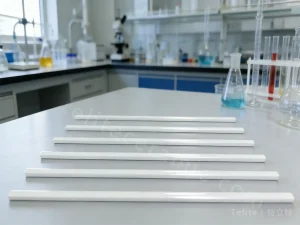
PBN Boat, PBN Evaporation Boat, PBN Synthesis Boat and PBN Polycrystalline Synthesis Boat designs can be customized according to drawings, samples, equipment space and loading requirements.
Common custom parameters include:
- Overall length, external width, internal width and height;
- Wall thickness, bottom thickness and dimensional tolerances;
- Boat depth, effective loading length and usable capacity;
- Rounded, flat or specially profiled bottoms;
- Rounded ends, tapered ends, open ends and transition profiles;
- Internal partitions, multiple sections or positioning features;
- Loading weight, material density and expansion space;
- Fit with furnace tubes, holders, heaters and thermal-field components.
9. Information Required for PBN Boat Selection
To determine whether a PBN boat is suitable and to define the required dimensions, please provide:
- Application: polycrystalline synthesis, heat treatment, reaction processing or evaporation;
- Material: material name, composition and purity requirement;
- Material Form: powder, granule, chip, solid piece or ingot;
- Loading: loading weight, loading depth and required volume;
- Temperature: operating temperature, maximum temperature, heating rate and holding time;
- Atmosphere: vacuum, inert gas, sealed ampoule or another controlled atmosphere;
- Equipment: furnace-tube size, support structure, heating method and hot-zone position;
- Previous Issues: sticking, wetting, wall climbing, deposition, splashing or contamination.
A PBN Boat is not universally compatible with every material and process. Suitability should be evaluated according to temperature, atmosphere, wetting behavior, volatility, chemical reactivity, loading form and established process data.
10. Frequently Asked Questions
What is a PBN Boat used for?
A PBN Boat is used for compound semiconductor polycrystalline synthesis, high-purity material heat treatment, material holding under vacuum or inert atmosphere, and selected VTE, OLED and vacuum evaporation processes.
Are PBN Boat and Pyrolytic Boron Nitride Boat the same product?
Yes. Pyrolytic Boron Nitride Boat is the full material name, while PBN Boat is the commonly used abbreviated name.
Is a PBN Evaporation Boat a directly heated resistance boat?
Usually not. A PBN Evaporation Boat is generally used as a material container and is heated by an external heater or furnace hot zone. It is different from directly energized tungsten or molybdenum evaporation boats.
Can a PBN Synthesis Boat be used for polycrystalline material preparation?
Yes. A PBN Synthesis Boat may be used for selected compound semiconductor and high-purity polycrystalline synthesis processes, subject to confirmation of material compatibility, reaction temperature, volatility and atmosphere.
Can a PBN Polycrystalline Synthesis Boat be customized?
Yes. Length, width, height, wall thickness, bottom thickness, boat depth, end profile and other structural features can be customized according to drawings or samples.
Does a PBN Boat require pre-use treatment?
Vacuum baking, preheating or other conditioning may be required depending on the vacuum level, material sensitivity and equipment process. Oil, dust and direct bare-hand contact with the internal surface should be avoided.
11. Summary
A PBN Boat is a high-purity container used for compound semiconductor polycrystalline synthesis, high-purity heat treatment, reaction processing and selected vacuum evaporation applications. PBN Evaporation Boat, PBN Synthesis Boat and PBN Polycrystalline Synthesis Boat are application-specific names for related PBN boat products.
Proper selection should consider the processed material, loading amount, operating temperature, atmosphere, equipment geometry, heating method and contamination limits. Custom PBN boats can be manufactured in different lengths, widths, heights, wall thicknesses, depths and end structures to match specific process requirements.


Reviews
There are no reviews yet.